
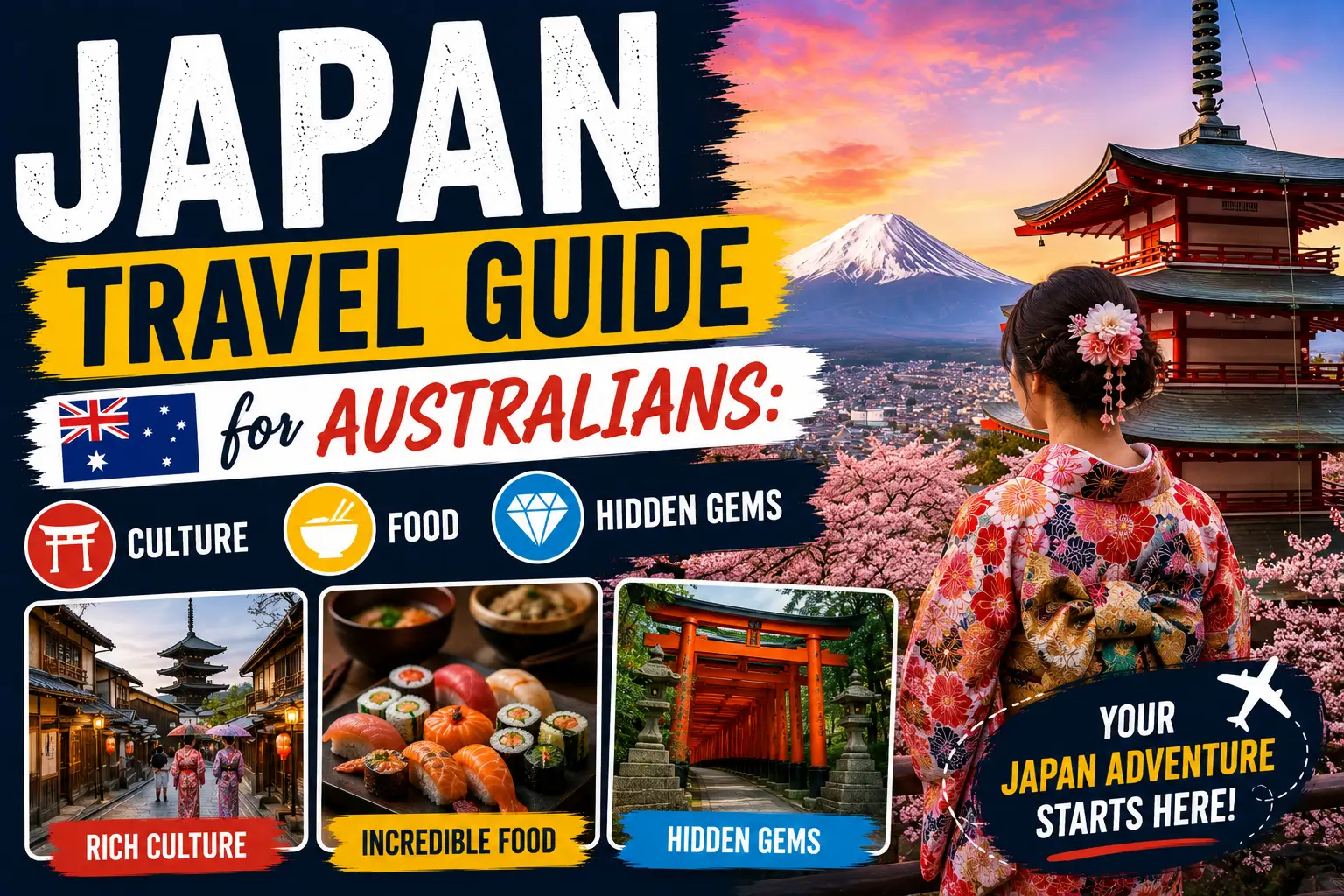

Japan has become one of Australia’s most popular long-haul destinations, and every Australian who returns from their first Japan trip says roughly the same thing: it was nothing like I expected, and I’m going back. The country’s combination of extraordinary food, meticulous service culture, visually striking cities, and ancient preserved landscapes is unlike anything else accessible from Australia within a manageable flight time.
Tokyo: Starting Point for Most Australians
Tokyo rewards the visitor who doesn’t over-schedule it. The Shibuya scramble crossing is worth seeing once, particularly at night. The teamLab digital art museums are genuinely extraordinary and should be booked months in advance. Tsukiji Outer Market still operates with excellent fresh seafood breakfast options despite the main market’s relocation to Toyosu. The Yanaka neighbourhood, a remarkably preserved pre-war shopping street and temple district, is the best antidote to Tokyo’s modernity.
Tokyo’s depachika (department store basement food halls) are some of the best food experiences in the city: perfectly presented, extraordinarily varied, and free to browse.
Kyoto: The Essential Japan Experience
Kyoto has more UNESCO World Heritage Sites than any other Japanese city. Fushimi Inari (the endless torii gate tunnels) is the photograph you’ve seen, and it’s best at dawn or dusk when the crowds thin. Arashiyama’s bamboo grove, Kinkaku-ji (the Golden Pavilion), and the preserved machiya townhouses of the Higashiyama district are the other highlights. The traditional ryokan experience, with tatami rooms, kaiseki dinner, and onsen hot spring bath, is quintessentially Kyoto and is bookable at properties ranging from AUD $200 to $800+ per person per night.
Kyoto is best visited in cherry blossom season (late March to mid-April, dates vary by year) or autumn foliage season (November). Both are extraordinary but very crowded. Booking accommodation 6 to 12 months ahead for these periods is essential.
Osaka: Food Capital
Osaka is Japan’s kitchen, and Dotonbori, the canal-side food and entertainment district, is the most concentrated expression of that identity. Takoyaki (octopus balls), okonomiyaki (savoury pancake), and kushikatsu (skewered deep-fried items) are Osaka’s street food specialties. Osaka Castle, a 20-minute subway ride from Dotonbori, is worth the climb for the views.
Osaka is also a good base for day trips to Nara (the deer park and Todai-ji temple, 45 minutes by train) and Hiroshima-Miyajima (the Peace Memorial and the floating torii gate, 90 minutes by Shinkansen).
The JR Pass: What It Is and Whether You Need It
The Japan Rail Pass is a time-limited rail pass for international visitors that gives unlimited travel on most JR trains, including Shinkansen bullet trains on most routes. It’s purchased outside Japan before your trip.
For a Tokyo-Kyoto-Osaka-Tokyo itinerary of 10 to 14 days, the JR Pass typically pays for itself versus buying individual Shinkansen tickets. For shorter trips or those staying in one city, it may not be cost-effective. We advise on whether the JR Pass makes sense for your specific itinerary and book it as part of your Japan package.
FAQ: Japan for Australians
How long is the flight from Brisbane to Japan?
Brisbane to Tokyo (Narita or Haneda) is approximately 9 to 10 hours non-stop on Japan Airlines or Qantas. Via Singapore or Hong Kong, total travel time is 11 to 14 hours.
When is cherry blossom season in Japan?
Cherry blossom season typically runs late March to mid-April, with Tokyo usually peaking in late March to early April and Kyoto a few days later. Exact dates vary by year based on winter temperatures. Booking accommodation in Kyoto and Tokyo during this period requires reservations months in advance.
Do I need to speak Japanese to visit Japan?
No. Major tourist areas, Shinkansen stations, convenience stores, and most restaurants in tourist cities have English signage and English-speaking staff or pictorial menus. Google Translate’s camera function is useful in smaller restaurants.
Is Japan expensive for Australians?
Japan has become more affordable for Australians as the yen has remained relatively weak in recent years. Mid-range accommodation runs AUD $120 to $200 per night. Food at local restaurants is excellent value, with good ramen for AUD $10 to $15. A 10-day Japan trip including flights typically costs AUD $4,000 to $7,000 per person depending on accommodation quality.
What’s the best month to visit Japan from Australia?
October-November (autumn foliage) and late March to mid-April (cherry blossom) are the two peak seasonal experiences. September is underrated: good weather, fewer tourists than cherry blossom season, and pleasant temperatures.
Book your Japan holiday from Australia with Sai World Travel. We arrange flights, JR Pass, ryokan stays, and complete Japan itineraries. Call 1800 724 967 or visit saiworldtravel.com.au.