
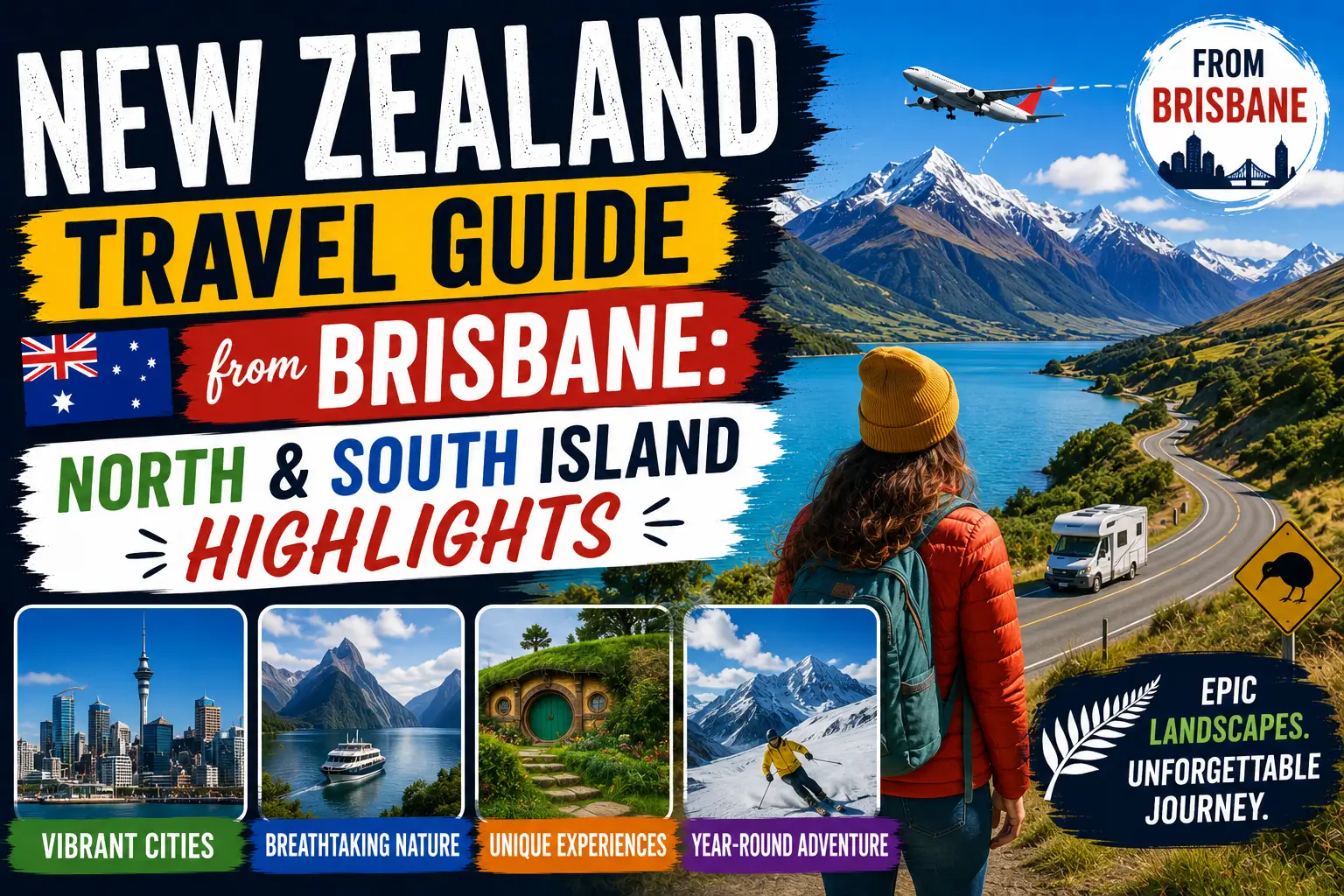

New Zealand sits less than three hours from Brisbane by air, making it one of the most accessible overseas destinations for Queenslanders — yet it manages to feel like genuine adventure. Two islands, each with a distinct personality, offer everything from geothermal parks and Maori culture in the north to glacier-carved fjords and world-class skiing in the south. This guide covers the highlights of both islands and the practical details you need to plan a great trip.
The North Island: Geothermal Wonders and City Life
Auckland is New Zealand’s largest city and most international visitors land here first. It’s a solid one-to-two-day stopover — Sky Tower views, the Viaduct Harbour waterfront, and day trips to Waiheke Island (vineyards, beaches, olive groves) are all excellent. But Auckland is a starting point, not a destination in its own right for most travellers.
Rotorua, three hours south by bus or 30 minutes by domestic flight, is the cultural and geothermal heart of the North Island. Te Puia showcases active geysers and Maori carving and weaving schools in a setting that smells faintly of sulphur — in the best possible way. A traditional hangi dinner with cultural performance is one of the most memorable evenings you’ll have in New Zealand. Continuing south, the Tongariro Alpine Crossing (one of the world’s great one-day hikes) passes active volcanic craters and emerald lakes in a landscape that doubles as Mordor in the Lord of the Rings films.
The South Island: Fjords, Mountains, and Adventure
Queenstown is New Zealand’s adventure capital — bungee jumping, white-water rafting, skydiving, and jet boating are all within minutes of town. But Queenstown is also surprisingly refined: excellent wine bars, farm-to-table restaurants, and a genuine sense of mountain-town community make it compelling even if adrenaline sports aren’t your thing. In winter (June to September), nearby Coronet Peak and The Remarkables ski fields attract serious skiers from around the world.
Milford Sound, a two-to-three-hour drive from Queenstown through Fiordland National Park, is widely described as one of the world’s most beautiful places — and the description holds up. The fjord walls rise 1,200 metres from black water, waterfalls cascade from rainforest, and fur seals lounge on rock shelves. A cruise on the Sound takes around two hours and can be booked as a day trip from Queenstown. Aim to visit in the morning before afternoon tour groups arrive.
Christchurch, the South Island’s main city, has rebuilt its identity after the devastating 2011 earthquake and is now an interesting mix of street art, container-village hospitality, and traditional heritage architecture. The Canterbury Plains stretching inland and the Akaroa Peninsula to the east are beautiful additions to any South Island itinerary.
Self-Drive New Zealand: The Best Way to Travel
New Zealand is made for road trips. Australians hold valid licences for driving in New Zealand (note: drive on the left, same as Australia). Hiring a campervan or rental car gives you freedom to stop at viewpoints, pull into roadside farmstands, and reach trailheads that bus tours don’t serve. The most popular self-drive route — Auckland to Queenstown via Rotorua, Taupo, Wellington (ferry crossing to Picton), and the West Coast glaciers — takes two to three weeks at a comfortable pace.
Roads are generally excellent but can be narrow and winding in the national park regions. Snow chains are compulsory on some mountain passes during winter. One-way car hire (picking up in Auckland, dropping in Queenstown, or vice versa) is standard and usually adds a modest fee to the rental cost. Book rental vehicles well ahead for December to February, New Zealand’s peak summer season.
Practical Travel Tips for Australians
Australian citizens do not need a visa to visit New Zealand — you can stay indefinitely as an Australian citizen under the Trans-Tasman travel arrangement. New Zealand dollars are the local currency; most places accept Australian credit cards, though currency fees apply. Tipping is not expected or required in New Zealand, unlike in the United States.
The New Zealand dollar typically sits at around 90 to 95 Australian cents, making New Zealand moderately affordable for Australian travellers. Accommodation in major centres costs AUD 150 to 300 per night for a midrange hotel. Petrol prices, restaurant meals, and activity costs are comparable to Australia. Many Australian travel insurance policies automatically extend to New Zealand — check your policy’s fine print.
Frequently Asked Questions: New Zealand from Brisbane
How long is the flight from Brisbane to Auckland or Queenstown?
Brisbane to Auckland is approximately 3 hours. Brisbane to Queenstown is roughly the same distance. Air New Zealand, Jetstar, and Qantas operate regular direct services. Christchurch is also served directly from Brisbane in around 3.5 hours.
Do Australians need a visa for New Zealand?
Australian citizens don’t need a visa to enter New Zealand. Permanent residents of Australia who are not Australian citizens do need a New Zealand Electronic Travel Authority (NZeTA), which can be applied for online at a small fee.
How much money do I need for two weeks in New Zealand?
Budget travellers staying in hostels and self-catering can get by on AUD 100 to 150 per person per day. A mid-range budget of AUD 200 to 300 per person per day covers comfortable accommodation, meals out, and key activities. A luxury New Zealand trip easily runs AUD 500+ per person per day.
When is the best time to visit New Zealand?
December to February is New Zealand’s summer — long days, beach weather in the north, and accessible hiking in the south. March and April offer beautiful autumn colours and fewer crowds. June to August suits skiers. September and October see spring wildflowers and whale watching off Kaikoura.
Can you do the Milford Sound from Queenstown in a day?
Yes, but it’s a long day — roughly 3 hours each way through Fiordland. Many travellers take a guided coach tour that includes the Sound cruise. An alternative is flying in from Queenstown by small aircraft, which dramatically shortens the journey and provides spectacular aerial views of Fiordland.
Is New Zealand good for families?
Yes. The country is safe, English-speaking, with excellent facilities for families. Children particularly love Rotorua’s geothermal parks, the Waitomo Glowworm Caves, Queenstown’s gondola and luge, and any beach on the Coromandel Peninsula.
How do I get between the North and South Islands?
The Cook Strait Interislander and Bluebridge ferries connect Wellington (North Island) with Picton (South Island) in about 3.5 hours. This crossing is an experience in itself and allows you to bring a rental car across. Alternatively, fly between Auckland and Christchurch or Queenstown in 1 to 1.5 hours.
Is travel insurance necessary for New Zealand?
New Zealand’s public health system (ACC) covers accident treatment costs for visitors, which is a significant safety net. However, ACC doesn’t cover illness, evacuation, or trip cancellation. Comprehensive travel insurance remains strongly recommended.
New Zealand is one of those destinations that rewards slow travel. The more time you give yourself, the more it delivers. Contact Sai World Travel to start planning your New Zealand itinerary from Brisbane — self-drive, guided tour, or a mix of both.